OLD MAN OTAKU / MANGA & PUBLISHING
KADOKAWA WORLD MANGA Opens a New English Door for Readers—and Global Creators
Free English chapters bring selected manga to more readers. The linked Atelier program offers a separate route to editors, with submission rules creators need to understand.
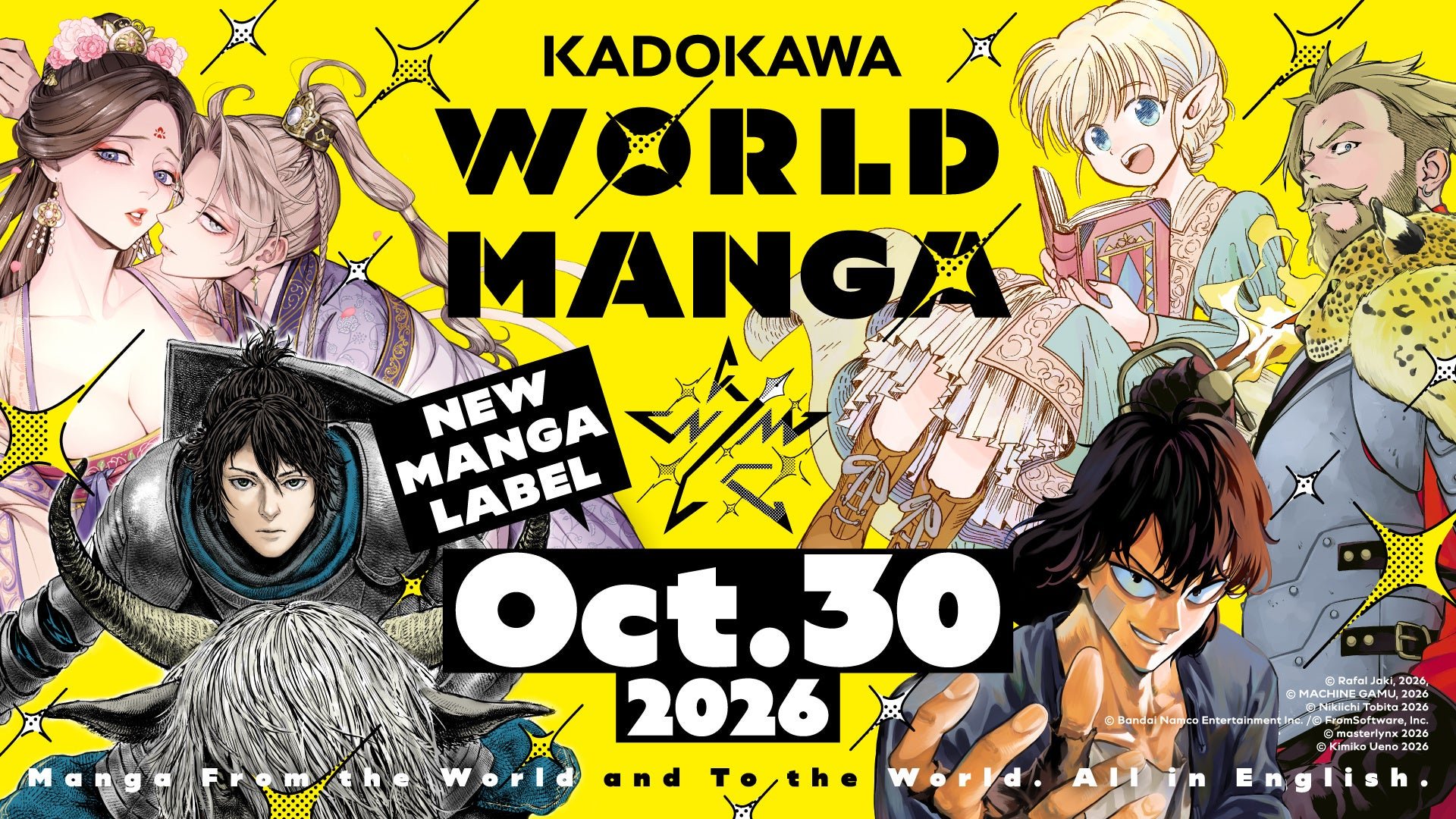
KADOKAWA has opened another route between manga made in Japan and readers around the world. Its new KADOKAWA WORLD MANGA English-language label launched inside KadoComi on October 30, 2026.
The publisher says selected series will offer their opening and latest chapters in English for free, helping overseas readers discover ongoing work before waiting for collected English editions. More titles are planned. KADOKAWA’s announcement establishes that offer; it does not promise a permanently free, complete archive of every series.
For readers, that is a useful new destination. For creators, the more interesting question is how the label connects to KADOKAWA’s international talent program.
What can you read?
The live label page lists four new English launches:
- BRAIN ALIVE
- Kung Fu Kung Fool
- Spica and Voice of Books
- A Peach Offering for the Imperial Court
It also gathers access to ELDEN RING The Road to the Erdtree and Suikoden STAR LEAP. Readers should check individual series pages for available chapters and update information.
KADOKAWA identifies Polish creator Rafał Jaki among the people behind BRAIN ALIVE and Indian creator masterlynx behind Kung Fu Kung Fool. The selection brings international creators and Japanese manga artists into the same English-facing collection. Anime Dispatch’s October 30 report independently covered the launch and its four-title lineup.
The creator opportunity runs through Atelier
KADOKAWA WORLD MANGA ATELIER is the related initiative for discovering and supporting creators outside Japan. Its website directs artists toward contests, online portfolio review and in-person editorial consultation. The new reading label will also carry English versions of works published through that project.
That creates a possible connection between finding talent, developing a manga and reaching readers across languages. Creators still need to distinguish the reading destination from the editorial application process: the label’s launch is not an announcement that anyone can upload a series and begin publishing there.
Before submitting: formats, selection and the AI rule
The official OnLINE Portfolio Review guidelines provide a concrete route for interested creators. They accept Japanese or English submissions, black-and-white or color art, and right-to-left, left-to-right or vertical-scroll formats.
Completed manuscripts are the normal requirement. Storyboards may be accepted with inked drawing samples; text-only novels and scripts are excluded. That makes the route relevant to artists working in several comics formats, including webtoons.
There is also a firm AI restriction: the guidelines exclude AI-generated works and works using AI-generated materials or images. Creators using those materials should account for that rule before preparing an application.
Editors review submissions, but only selected applicants are contacted about an online meeting. Neither contact nor a meeting is guaranteed, and an initial meeting does not guarantee a partnership. Applicants should read the full current requirements at the official link.
RogueVerse analysis: access is the real story
A manga can struggle to build an international audience when interested readers cannot follow it in a language they understand. Making a clear, official English entry point could help a promising story turn passing curiosity into repeat reading.
The strongest part of this strategy is the potential relationship between creator discovery and reader access. A portfolio review can help an editor find a project. A readable release can help that project find people who care about it. Those are different problems, and a useful publishing system has to address both.
For independent creators, this is a development to study with specific questions in mind. How much editorial support would a selected project receive? Who would handle translation? What rights and obligations would a proposed agreement involve? A promising route is valuable when its practical terms fit the creator and the work.
For readers, the next step is easier: explore the available series and see what earns a place on your reading list. For creators, study the work being published, prepare a strong sample and use the correct editorial route. The opening chapter may be free; earning the next reader still takes a good story.
Copyright & image ownership
Featured image: official KADOKAWA WORLD MANGA launch visual, supplied with KADOKAWA’s October 30 announcement via PR TIMES. The original artwork and embedded rights notices are preserved.
Credits printed on the visual: © Rafal Jaki, 2026; © MACHINE GAMU, 2026; © Nikiichi Tobita 2026; © Bandai Namco Entertainment Inc. / © FromSoftware, Inc.; © masterlynx 2026; © Kimiko Ueno 2026; © Yuho Ueji 2026.
Third-party characters, artwork, titles, logos and trademarks belong to their respective rights holders. RogueVerse Studio claims no ownership of that IP and is not affiliated with or endorsed by KADOKAWA or the featured creators.
Article text and RogueVerse branding © 2026 RogueVerse Studio. All rights reserved.