MOVIES / REVIEW • AUGUST 3, 2026
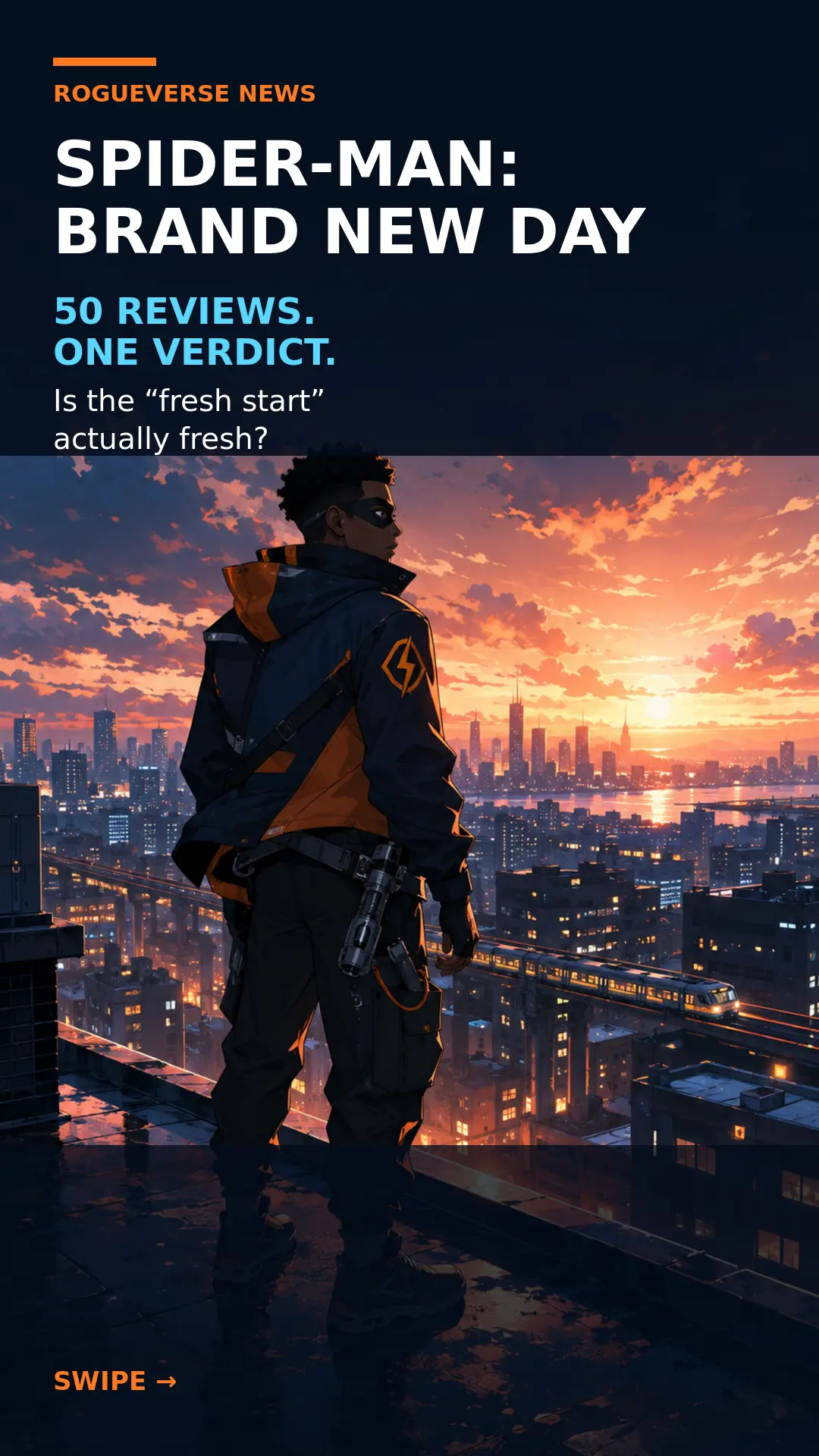
Spider-Man: Brand New Day Is a Strong Emotional Reset Trapped Inside a Crowded Franchise Machine
RogueVerse analyzes the full story and averages exactly 50 professional reviews into a transparent new movie-rating system.

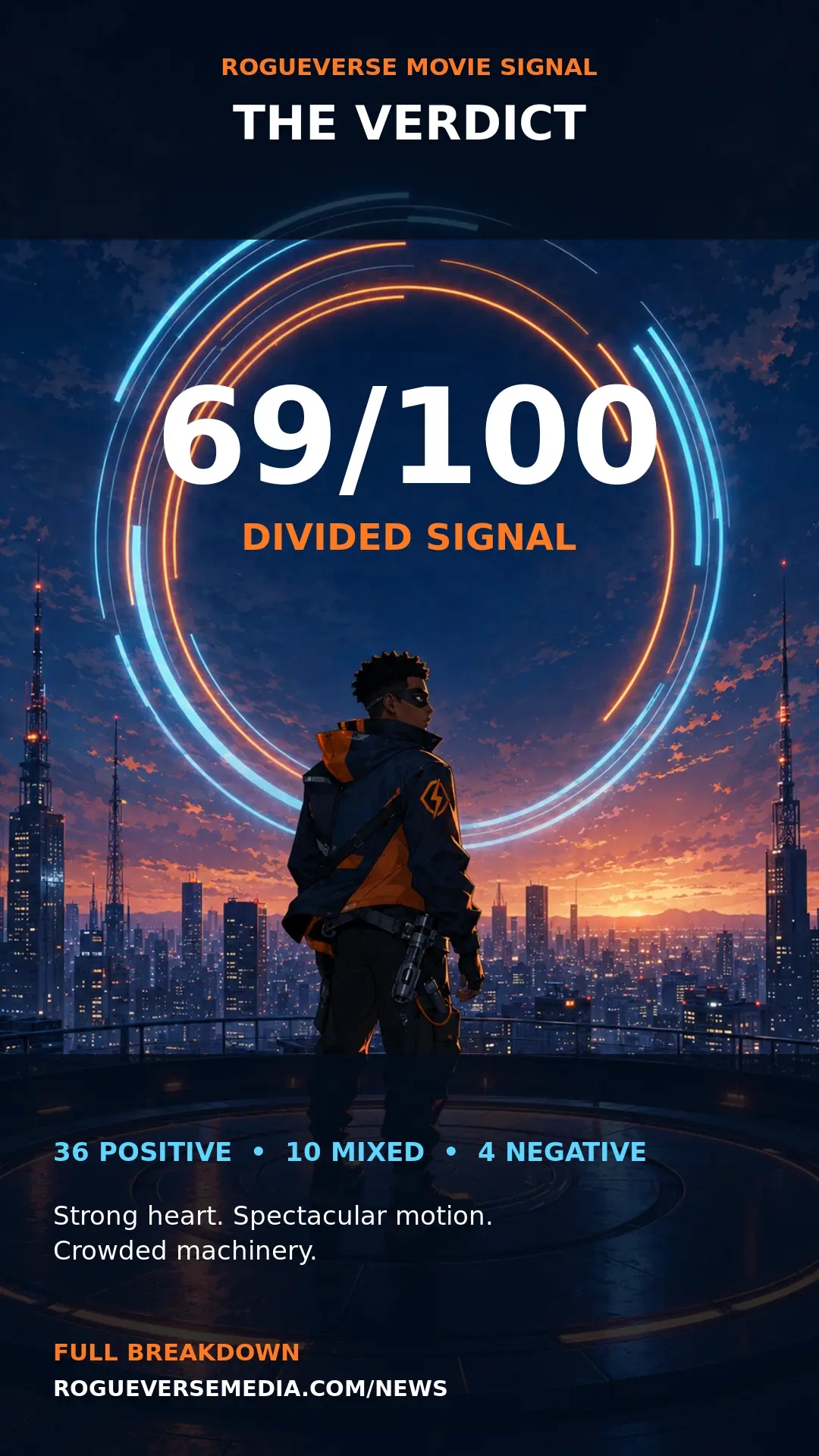
69/100
Divided Signal
- 50professional reviews
- 68.82simple mean
- 70median score
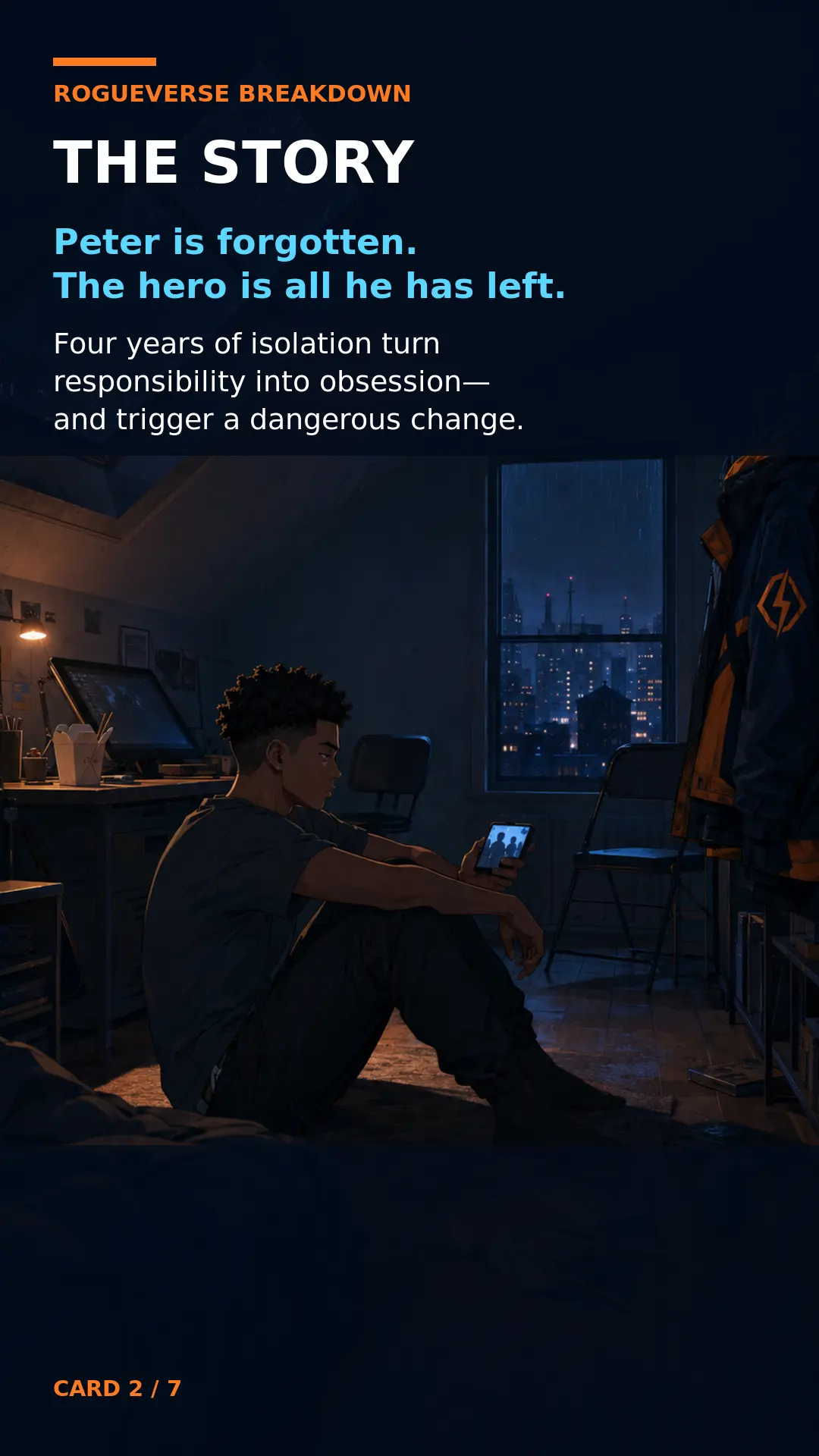
After Spider-Man: No Way Home erased Peter Parker from the memories of everyone he loved, the cleanest possible follow-up would have been a small, lonely New York story. Peter would have no Avengers safety net, no famous mentor and no friend in the chair. He would have to rebuild his life while deciding whether Spider-Man was still a calling—or simply the only identity he had left.
Spider-Man: Brand New Day begins with exactly that powerful idea. Four years have passed. Peter lives alone, protects New York full-time and watches MJ and Ned move forward without him. The official Sony synopsis says the pressure of seeing his old friends move on sparks a change he may not be able to control, while a villain “no one can even see” threatens the city. That is an unusually intimate foundation for a modern superhero blockbuster: the enemy outside Peter and the transformation inside him are both connected to isolation. Sony Pictures
The result is a movie critics broadly recommend but do not love with equal intensity. Rotten Tomatoes currently reports a 90% critics score and praises the spectacular set pieces, mature emotional stakes and Tom Holland’s performance. Metacritic reports a more restrained 66/100 from 56 critics. Those numbers are not contradictory: Rotten Tomatoes primarily reflects the percentage of reviews judged positive, while Metacritic’s score attempts to capture the strength of the grades themselves. A movie can persuade many critics to recommend it without persuading them that it is a masterpiece. Rotten Tomatoes Metacritic
That distinction is the reason RogueVerse created the Movie Signal. Instead of borrowing an aggregator’s headline percentage, we normalized and averaged 50 professional critic scores, then read the accompanying verdicts for the themes behind the number. The result for Brand New Day is 68.82, rounded to a RogueVerse Movie Signal of 69/100. That places it in our Divided Signal tier: clearly worth discussing, easy to recommend to the right audience, but too uneven for universal approval.
The spoiler-light verdict
At its best, Brand New Day understands that Peter Parker’s greatest danger is not a villain, a monster or the next crossover. It is his temptation to disappear inside the work. If nobody remembers Peter, then being Spider-Man can become an endless shift—a way to stay useful without having to risk being known.
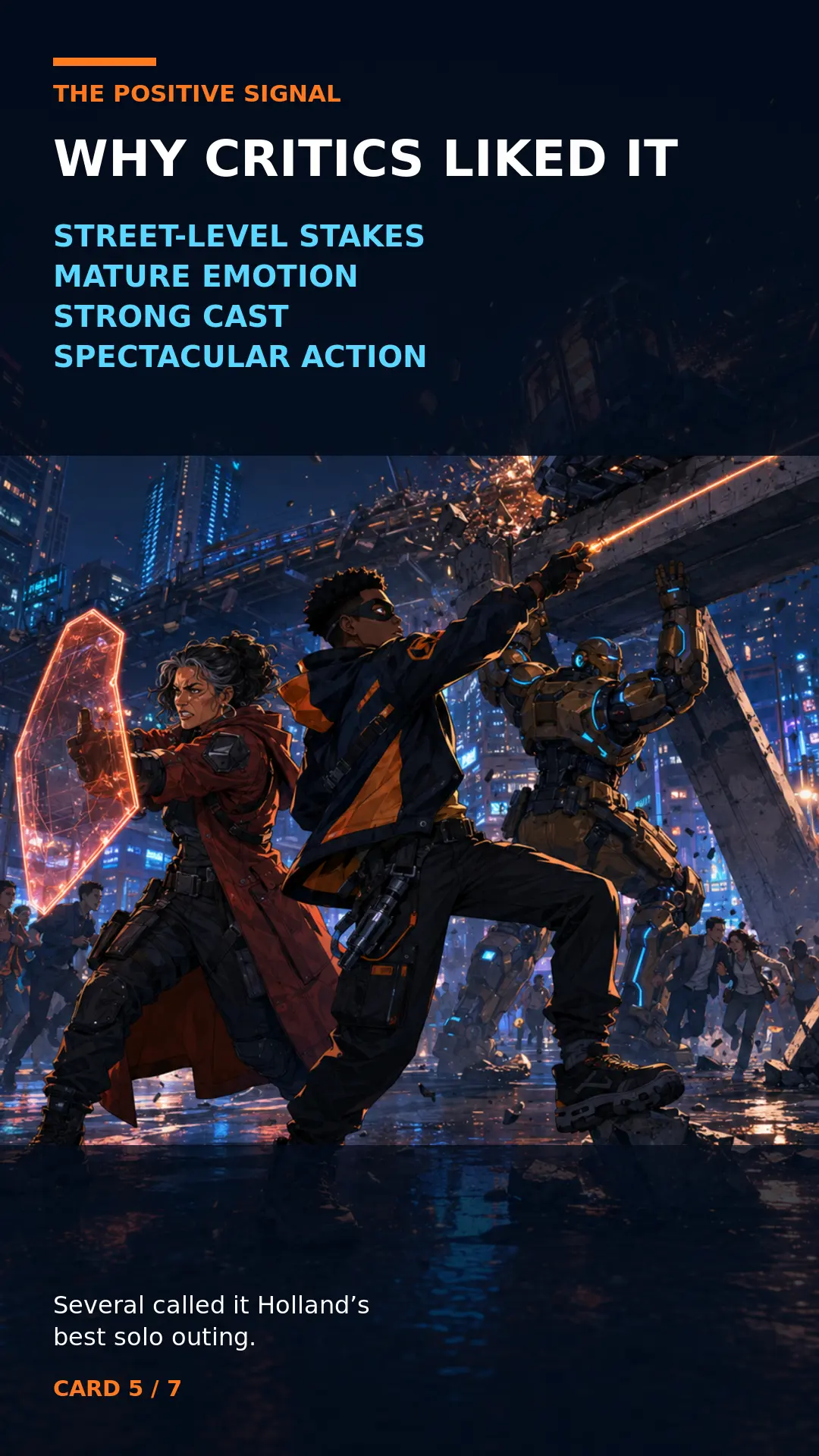
Director Destin Daniel Cretton builds the film around that tension. Reviewers repeatedly praised the more mature tone, the ground-level New York setting and Holland’s ability to make Peter’s loneliness feel physical. Several critics called this his best solo performance in the role. The young ensemble also received consistent praise: Zendaya, Jacob Batalon and Sadie Sink give the story an emotional center sturdy enough to survive an extremely busy plot.
The action is another common strength. The movie uses a hero whose body is changing, a psychic threat who can move through other people and street-level allies who violently disagree about how to protect the city. That combination gives the fights emotional friction instead of treating them as pauses between exposition scenes. The scale may expand, but the most effective moments remain personal: Peter trying not to hurt someone, trying to reach someone or choosing compassion when violence would be easier.
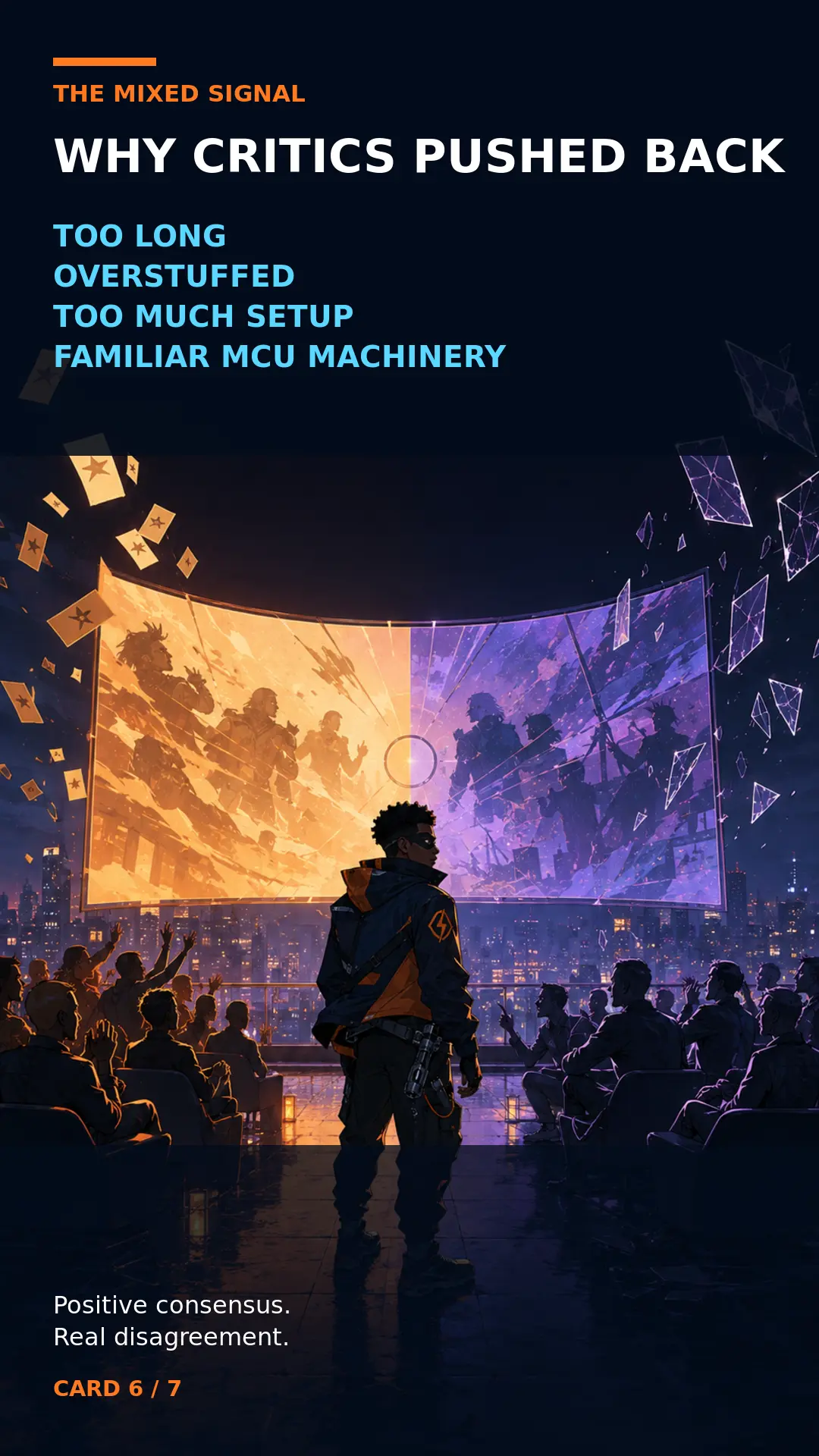
The weakness is Marvel’s familiar hunger to make one movie perform the labor of several. Brand New Day must continue the memory-spell consequences from No Way Home, establish Peter’s biological transformation, introduce a major mutant character, expand Damage Control into a central threat, use multiple established MCU figures and plant seeds for future Avengers and X-Men stories. At 145 minutes, the movie has room, yet many critics still found it overstuffed or strangely paced. Some believed its emotional story survived the franchise architecture. Others felt the architecture became the movie.
That is the central split in the 50 reviews. Admirers saw a grounded, emotionally mature Spider-Man film that finally allows Holland’s Peter to stand on his own. Detractors saw another “new beginning” crowded with cameos, setup and obligations to projects that do not yet exist. Both readings are supported by the film. It is intimate in theme and enormous in administration.
FULL STORY BREAKDOWN — MAJOR SPOILERS BEGIN HERE
Peter’s life after No Way Home is not a fresh start so much as self-erasure made routine. He has spent years fighting crime while living in a small apartment with almost no personal life. Detective Jean DeWolff recognizes the pattern and encourages him to slow down, but Peter treats constant patrol as a responsibility he cannot put aside. Spider-Man is loved by the city; Peter Parker effectively does not exist.
That fragile arrangement cracks when Peter encounters Ned, follows him to a housewarming gathering and discovers that Ned and MJ are living together after returning from MIT. They interact with Peter as a stranger. He cannot bring himself to reveal the history they shared, and learning that MJ has a boyfriend sends him away with the wound reopened.
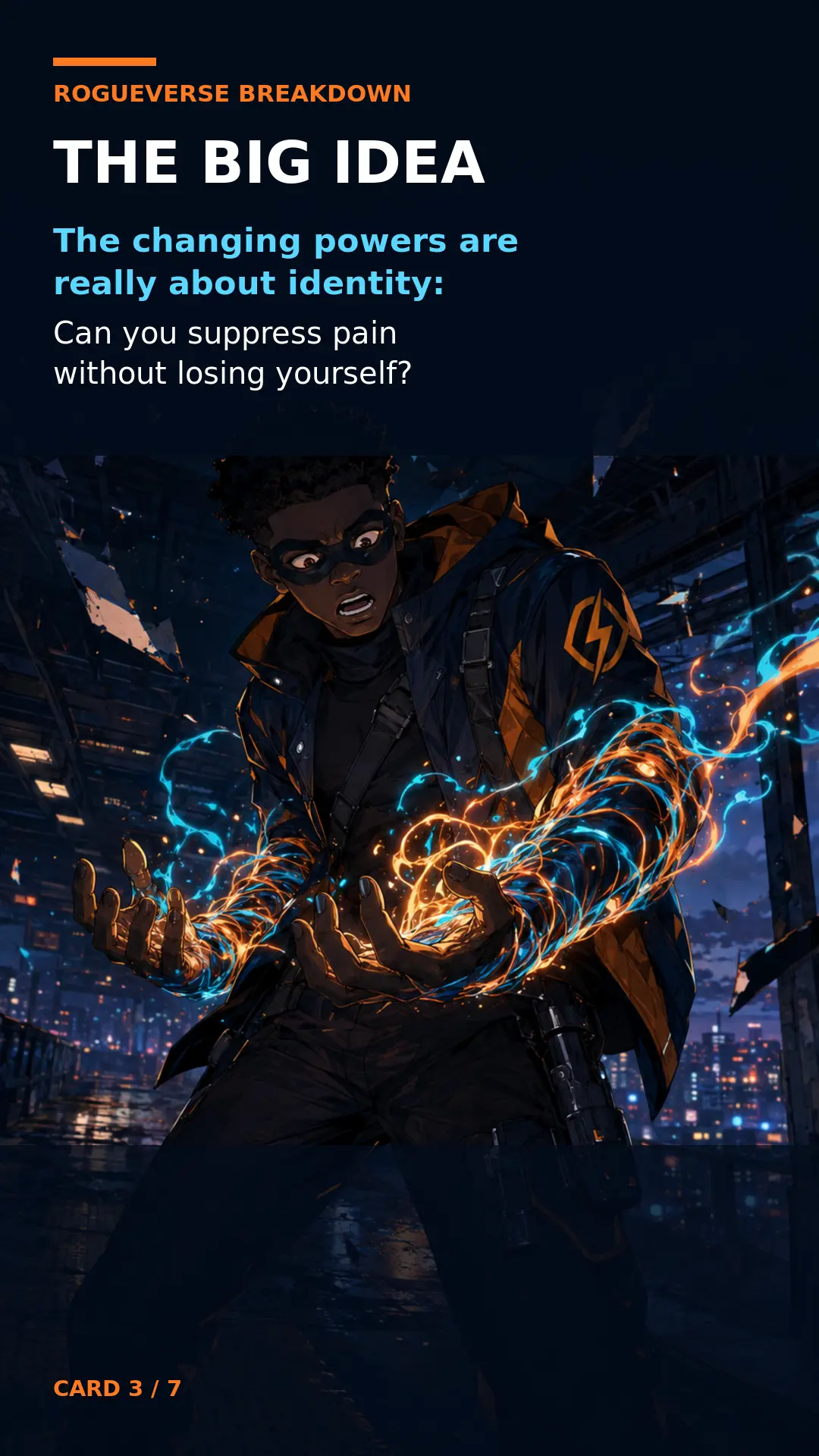
The emotional shock accelerates a physical problem. Peter’s altered DNA is changing again, producing new abilities while making his strength and anger harder to control. The film treats the condition like a dangerous form of “spider-puberty”: the part of him he relies on as a hero is threatening to consume the ordinary humanity he has neglected. He turns to Bruce Banner, whose own life has been defined by conflict between human identity and transformative power. Banner’s inhibitor technology suggests a solution—Peter may be able to suppress the arachnid side of his biology before it overwhelms him.
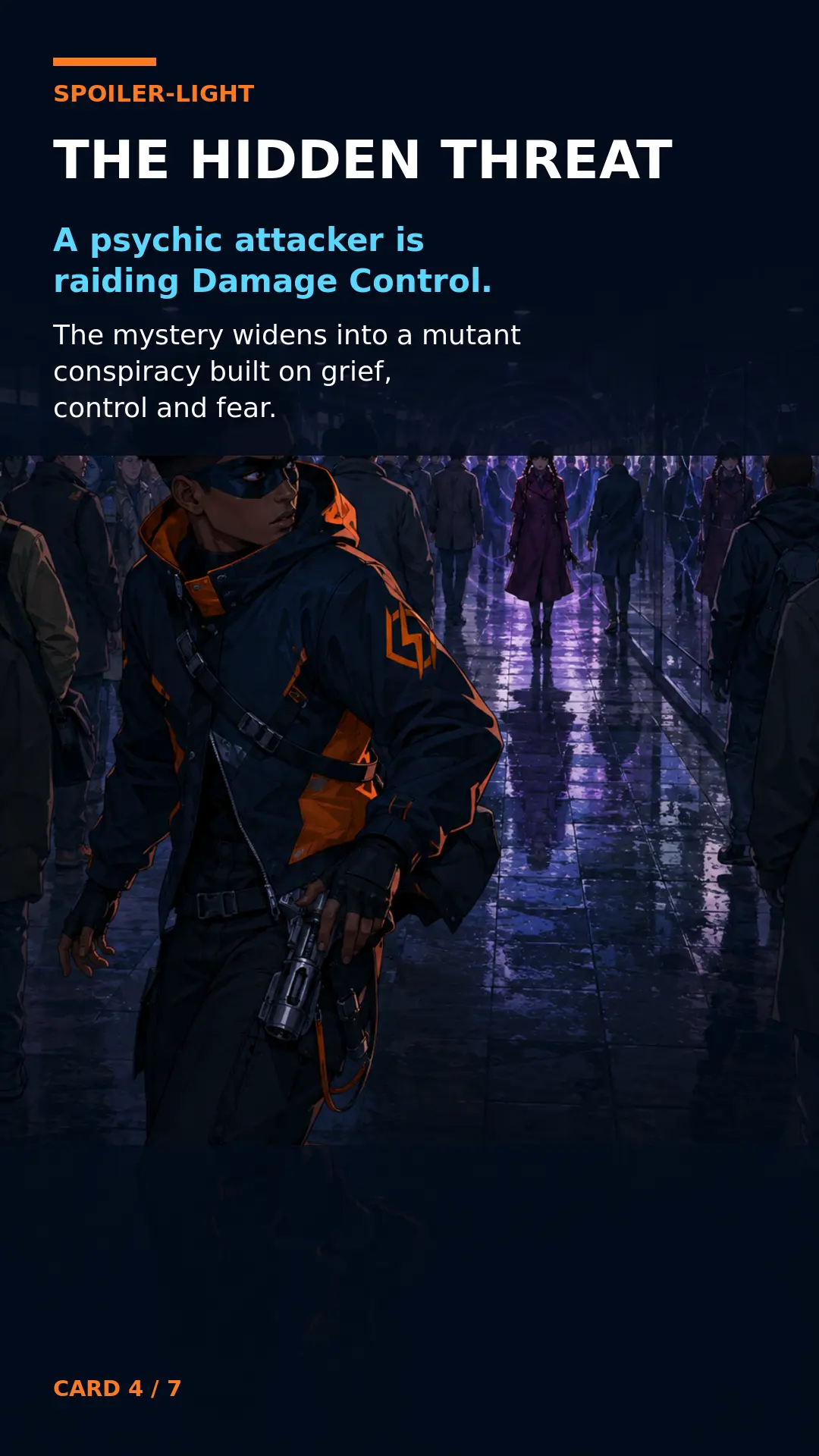
At the same time, the Department of Damage Control is suffering a series of break-ins. The apparent attacker can possess people, moving from body to body while remaining difficult to identify. Peter is unusually resistant, which links the mystery to his changing biology. The intruder is searching for something called “V-Max,” and the pursuit pulls Peter into an alliance with Damage Control even as the organization conceals its real agenda.
The psychic attacker is eventually revealed as Jean Grey, played by Sadie Sink. The film initially frames Jean as a frightening antagonist capable of controlling powerful people, including Hulk and Frank Castle. Her abilities turn every ally into a potential weapon and make physical force a poor answer. Yet Jean is not trying to conquer New York. She is following the final psychic impression left by her sister Sara, who died in Damage Control custody.
Peter prepares two inhibitors: one to contain his own mutation and another to suppress Jean’s powers. During a major confrontation at Damage Control headquarters, Jean uses possessed bodies and a rampaging Hulk to reach a restricted vault. Frank Castle joins the fight but ignores Peter’s warning to stay outside Jean’s psychic range. Jean takes control of him as well, using his weapons and explosives to break through the facility.
Peter manages to attach the inhibitor to Jean. Before she loses consciousness, she says Sara’s name. Damage Control director William Metzger offers a convenient explanation and claims Sara was merely a dead colleague whose memory Jean discovered while possessing him. Peter initially accepts the story, but the lie begins to unravel.
The emotional subplot with MJ provides the clue. MJ finds a note Peter wrote about their shared history. She understands what he claims they once meant to each other, but she refuses to pretend the erased relationship has automatically returned. She tells him that she does not remember loving him. It is a painful but necessary boundary: Peter cannot treat an old romance as a debt the present-day MJ owes him.
While Peter brings her home, a conversation about Jean’s possession reveals that victims do not retain memories from the periods when Jean controls them. Metzger therefore could not remember the information Jean supposedly found inside his mind. Peter realizes the director fabricated the explanation.
The truth is uglier. Damage Control has been imprisoning and experimenting on mutants, hoping to reproduce their powers for its own forces. Sara died inside the program. “V-Max” is not a weapon or a coded message; it is the damaged label on an air vent—the last meaningless object Sara saw as she died and the image that passed through her connection with Jean. Jean built her entire search around the final fragment of her sister’s experience.
When Jean learns the truth, grief and rage push her powers across the surrounding area. She freezes people in place, captures Metzger and prepares to kill him. Peter cannot reach her while he is chemically suppressing the very transformation that makes him different. He removes his inhibitor and accepts his changing body, not as permission to lose control but as a part of himself he must integrate.
The climax rejects the standard solution of defeating pain with a harder punch. Peter opens his mind to Jean. She experiences his losses, including Aunt May’s influence, and recognizes the loneliness they share. Peter shows her that being wounded does not make either of them unworthy of connection. Jean releases Metzger—but Frank has already fired at her. Peter takes the bullet.
Jean keeps Peter alive by entering his body and sustaining him until he can recover. He wakes in a hospital surrounded by letters and signs from New Yorkers grateful to Spider-Man. Frank helps preserve his secret by appearing publicly in a substitute costume while Peter slips away. Damage Control faces investigation, Jean leaves the city and Peter finally accepts that protecting people does not require permanent emotional exile.
The final encounter with Ned makes that hope concrete. Peter introduces himself by name. The two perform their old secret handshake, and Ned’s reaction suggests that some emotional trace of their friendship survived the spell—or that the spell itself may be weakening. MJ’s romantic memory is not magically restored, which keeps her choice intact, but Peter has finally taken the first honest step toward rebuilding a life.
The post-credit scene uses Ned’s Spider-tracking app to detect a Spider-Man signal in outer space. It does not identify who the signal belongs to. The possibilities include Peter’s next adventure, another Spider-person, a symbiote connection or a setup for the coming multiversal Avengers story. Those are theories, not confirmations. The only explicit promise is that Spider-Man will return. Entertainment Weekly
What the story is really about
The movie’s biological transformation and Jean’s psychic powers tell the same story from different directions. Peter tries to suppress the part of himself he fears. Jean tries to make the world feel the pain she cannot contain. Bruce Banner and Frank Castle provide two more variations: one controls a destructive second self through technology; the other converts grief into permanent war.
The film’s answer is integration. Control does not mean denial, and healing does not mean pretending the wound never happened. Peter cannot recover by being Spider-Man every waking hour. Jean cannot honor Sara by becoming the weapon Damage Control already believes mutants to be. MJ cannot be ordered back into a relationship because another version of her made a promise. Each person has to be recognized as they are now.
That thematic unity is why the movie’s best scenes land even when the plot becomes crowded. The climax is built around empathy, sacrifice and the decision to be emotionally visible. Critics who loved the film responded to that sincerity. Critics who disliked it generally did not reject the theme; they objected to how much franchise machinery competes for space around it.
The 50-review consensus
For this analysis, RogueVerse used the 50 most recently indexed professional critic reviews on Metacritic as of August 3, 2026. Each review already carried a normalized score on a 100-point scale, allowing a transparent arithmetic mean without converting stars, letter grades or thumbs-up judgments ourselves.
The numbers:
- Mean: 68.82/100
- Median: 70/100
- Middle 50%: 60–80
- Population standard deviation: 14.26 points
- Positive (61–100): 36 reviews
- Mixed (41–60): 10 reviews
- Negative (0–40): 4 reviews
The 14-point spread matters. This is not a case where nearly everyone delivered the same polite 7/10. Scores ranged from 38 to 92. The consensus is favorable, but the intensity of approval varies dramatically.
What supporters consistently praised
The strongest positive pattern was character and emotional maturity. Reviews from The Independent, The Hollywood Reporter, Empire, Screen Daily and others emphasized Peter’s maturation, Holland’s earnest performance and the emotional payoff of the MJ–Ned–Peter relationship. Critics also praised the return to street-level New York stakes, even when the cast around Peter remained very MCU-sized.
The second major strength was action with purpose. Positive reviews described Cretton’s set pieces as thrilling, stylish and connected to character choices. The Film Verdict’s 82, Polygon’s 92 and The Seattle Times’ 88 reflect the view that the movie delivers blockbuster motion without abandoning its emotional core.
Finally, many supporters saw Brand New Day as a healthier model for franchise storytelling. Even critics who acknowledged its setup work argued that it still ends with a satisfying present-tense story. In a cinematic universe often accused of feeling like homework, that counts as a meaningful victory.
What skeptics consistently criticized
The clearest complaint was overstuffing. Damage Control, mutations, returning relationships, Hulk, Punisher, Jean Grey, mutant experimentation and future-film setup all compete inside one movie. Critics at Film Threat, AwardsWatch, The A.V. Club and the Boston Globe identified too many plot obligations even when they ultimately recommended the film.
The harsher reviews saw the title itself as the problem. If this is truly a “brand new day,” why does so much of it feel like familiar MCU management? Rolling Stone, Movie Nation, The Atlantic and Vulture argued that the reset is cosmetic because the film quickly surrounds its isolated hero with the same shared-universe scaffolding.
Pacing and length formed the third recurring criticism. Several reviews said the movie takes too long to begin moving or loses momentum in its second half. The 145-minute runtime is not automatically a flaw, but the density of introductions and future-facing threads makes the time feel less focused than it should.
The RogueVerse Movie Signal system
The RogueVerse rating is designed to answer two different questions: How strong is the average critical response? and How stable is the consensus?
The headline Movie Signal is the simple mean of 50 normalized professional review scores, rounded to the nearest whole number. We then publish the median, distribution and spread so readers can see whether the number represents broad agreement or a critic civil war.
The reusable tiers are:
- 90–100 — Mythic Signal: exceptional and potentially culture-shaping
- 80–89 — Rogue Essential: strongly recommended with major strengths
- 70–79 — Rogue Approved: solid recommendation with manageable flaws
- 60–69 — Divided Signal: worthwhile elements, meaningful disagreements
- 40–59 — Frayed Signal: significant flaws; mainly for invested audiences
- 0–39 — Dead Channel: little critical support
For Brand New Day, 69/100 is the highest edge of Divided Signal. One more point would enter Rogue Approved territory, which feels appropriate: the movie is close to breaking free, but the franchise will not quite let go of its ankle.
Our qualitative Pulse Profile is:
- Heart: 86 — the Peter, MJ, Ned and Jean material is the film’s greatest power
- Action & Craft: 82 — inventive, readable and emotionally motivated set pieces
- Story Cohesion: 66 — strong thematic spine, crowded plot delivery
- Freshness: 55 — a compelling reset repeatedly interrupted by familiar machinery
- Franchise Freedom: 48 — too much energy is reserved for future projects
These category marks are an editorial synthesis of recurring review themes; they are not additional mathematical inputs to the 69 score.
Final RogueVerse verdict
Spider-Man: Brand New Day is a good film wrestling with the possibility of becoming a great one. Its central story is honest, contemporary and unusually human: a young man disappears into constant productivity because being useful feels safer than being known. His body starts changing because the part of himself he has weaponized can no longer be separated from the person he refuses to nurture.
Holland sells that pain. Zendaya and Batalon make the consequences of the memory spell feel like relationships rather than continuity notes. Sink gives the movie a second wounded center, allowing its final conflict to be resolved through recognition instead of domination. Cretton brings energy and emotional clarity to the action.
Then the shared universe barges in carrying six folders and asking everyone to initial the next phase.
For audiences who want an emotionally grounded Spider-Man, strong performances and street-level heroism, this is an easy theatrical recommendation. For viewers exhausted by cameos, setup and superhero movies that advertise tomorrow while telling today’s story, the 145-minute construction may feel far less new than its title promises.
RogueVerse Movie Signal: 69/100 — Divided
Signal.
Bottom line: strong heart, spectacular motion, crowded
machinery.
Primary research links
- Official synopsis and cast — Sony Pictures
- Critics consensus — Rotten Tomatoes
- 56-review index and normalized scores — Metacritic
- Ending breakdown — Cosmopolitan
- Jean Grey reveal and Damage Control plot — SYFY
- Post-credit scene — Entertainment Weekly
- Complete 50-review scoring ledger
RogueVerse reporting note: Plot claims were cross-checked across the official synopsis and multiple independent spoiler explanations. Speculation about the post-credit scene is labeled as theory. Review quotations are summarized rather than reproduced at length.